Probate is the Legal Process to Transfer Title of a Decedent’s Assets
Probate is the legal process of transferring assets owned in a deceased persons name to his or her legal heirs. Before the assets can be transferred, (1) any creditors of the decedent must be given notice of death; (2) an inventory of the decedent’s assets must be taken; (3) it must be determined if a valid Last Will and Testament exists; (4) creditor claims must be accepted, partially accepted or denied; (5) assets may be sold or be retained to be distributed in kind to the beneficiaries; (6) an accounting must be prepared unless waived by the beneficiaries, and (7) a final report and order prepared for the Probate Judge so that title to the remaining assets can be distributed. Due to statutory time limits and the court workload in Riverside County and San Bernardino County, a probate proceeding will last at least eight months, with the average probate taking closer to a year to be resolved. Some estates take much longer to close. The estate of Marilyn Monroe was the longest in California history, remaining open for eighteen years.
Getting Started
In our first blog post on this subject we will be describing the initial process. The person managing the probate estate is known as the Executor or Executrix if the Decedent had a Will. If the decedent died with out a Will, the person managing the probate estate is known as the Administrator. Another name for both positions is Personal Representative. The document that allows the Personal Representative to access the decedent’s assets and speak with creditors of the decedent is known as Letters Testamentary or Letters of Administration (depending if the person died with a Will or without one).
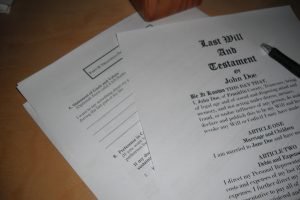
If the decedent had a valid Last Will and Testament, any assets remaining after paying off the cost of administration and the decedent’s creditors will be distributed pursuant to the Will’s direction. If the decedent died without a Will, also known as dying intestate, the decedent’s assets will be distributed pursuant to California law.
Smaller Estates
Transfer of Personal Property Less Than $150,000 in Value
If the estate of the person who died is less than $150,000, you may be able to use California’s Affidavit to Transfer Personal Property to transfer the assets in the estate without a formal probate. In determining the $150,000 value for personal property, you do not include the value of cars, boats, motor homes, property held in a revocable or irrevocable trust, joint tenancy property, community property or separate property that passes to the surviving spouse, life insurance or other assets with a designated beneficiary that passes outside of probate, or real property located outside of California. An Affidavit cannot be used to transfer real estate in California, even if it less than $150,000 in value.
If you qualify to use this procedure, you must first wait at least forty days from date of death. You must then complete the Affidavit, have it notarized, attach a certified copy of the death certificate to the Affidavit, and proof that the property in question was owned by the decedent. If more than one person is a beneficiary of the estate, all the beneficiaries must sign the Affidavit. Here is an example of a 13100 Affidavit.
NOTE: If a beneficiary uses this procedure, any creditor of the decedent can demand payment of the debts of the decedent from the property that was transferred to the beneficiary using this procedure. It is not a method to avoid repaying the decedent’s debts.
Transfer of Real Estate Less Than $50,000 in Value
If the decedent owned real property in California worth less than $50,000 (perhaps a timeshare or a partial interest in the real estate), the beneficiary may be able to transfer title using an Affidavit re: Real Property of Small Value. The beneficiary would complete a Judicial Council Affidavit Form DE-305, along with an Inventory and Appraisal Form DE-160 completed by the Probate Referee showing a value for the property of less than $50,000. If you qualify to use this procedure, you must first have the Affidavit notarized and attach the Inventory and Appraisal Form and a certified copy of the death certificate to the Affidavit. If more than one person is a beneficiary of the estate, all the beneficiaries must sign the Affidavit. If the court clerk approves your Affidavit, the Judge will sign it and you can use it to transfer title to the property.
NOTE: If a beneficiary uses this procedure, any creditor of the decedent can demand payment of the debts of the decedent from the property that was transferred to the beneficiary using this procedure. It is not a method to avoid repaying the decedent’s debts.
Transfer of Real Estate AND Personal Property Less Than $150,000 in Value
If the decedent owned real property and personal property in California worth less than $150,000 (remember that the Affidavit described above is for transfer of personal property only), the beneficiary may be able to transfer title by filing a Petition to Determine Succession to Real Property and Personal Property using Judicial Council Affidavit Form DE-310, and an Inventory and Appraisal Form DE-160 completed by the Probate Referee showing a value for the property of less than $150,000 for all of the real and personal property, in addition to an Order Determining Succession to Real Property Form DE-315 . If you qualify to use this procedure, you must file the Petition. The clerk will then set a hearing date for you. If everything is in order at your court hearing, the Judge will sign the Order and you can use it to transfer title to the property.
NOTE: If a beneficiary uses this procedure, any creditor of the decedent can demand payment of the debts of the decedent from the property that was transferred to the beneficiary using this procedure. It is not a method to avoid repaying the decedent’s debts.
Spousal Property Petition
A Spousal Property Petition is used to transfer or confirm ownership of property with the surviving spouse of the decedent. To file this petition, you must be the surviving spouse or registered domestic partner of the decedent, or the conservator of the surviving spouse or partner, or the Personal Representative for the estate of the surviving spouse who is now deceased. A Form DE-221 must be completed and filed with the court along with a copy of the deceased spouse’s Last Will and Testament (if he or she had one). In addition, you must provide proof that the property in question is supposed to pass to the surviving spouse as either community property or separate property of the deceased spouse.
Riverside Probate Lawyer Explains Options
As you can see, it may be possible to avoid a full blown probate proceeding that may last a year or more in some circumstances. If you have a deceased loved one who lived in Riverside County or San Bernardino County and you are looking for a Probate Lawyer who can give you all of your options, call our office at 951-888-1460 to schedule an appointment with one of our attorneys or click here to schedule a consultation. If you are a beneficiary of an estate being administered in the Riverside Probate Court or San Bernardino Probate Court and do not believe it is being properly administered, give our office a call to schedule a consultation with one of our Probate Attorneys.
Have a question? Ask Dennis.

- Questions to Ask an Elder Care Attorney - May 10, 2023
- 5 Reasons to Hire a Lawyer to Help You Probate an Estate - June 23, 2021
- How Do I Become My Father’s Guardian? - June 26, 2020

